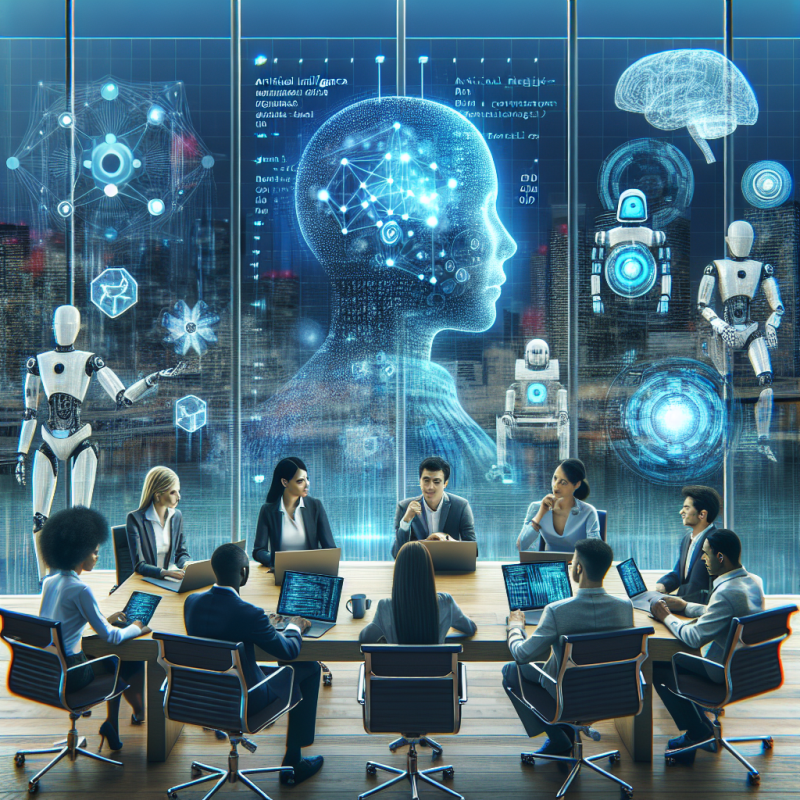
Artificial Intelligence, or AI, got its start in the 1950s when some really smart folks decided to see if machines could think like humans. It all kicked off with a workshop at Dartmouth College in 1956. That’s when the term "artificial intelligence" was born! Imagine a bunch of researchers sitting around, brainstorming how to make computers smarter. They believed machines could solve problems and learn, just like us.
Fast forward a few years, and we see early programs that could play games or solve math problems. These were baby steps but showed real promise. One of the big highlights was a program called the Logic Theorist, created by Allen Newell and Herbert A. Simon. It could prove mathematical theorems, making people realize that machines could handle complex tasks.
Then came the 1970s and ’80s, often called the "AI winter." Funding dropped because the technology wasn’t living up to the hype. People got frustrated, and many researchers shifted their focus. But those who stuck around kept working behind the scenes, laying the groundwork for the AI we see today.
The real game-changer was the explosion of data and processing power in the 21st century. With the rise of the internet, we began to collect and analyze huge amounts of information. Suddenly, AI didn’t just feel like a dream—it became a reality. Machines could recognize faces, understand speech, and even learn from their mistakes.
Every day, AI pops up in our lives in ways we often don’t even notice. From our smartphones to smart home devices, it's everywhere! And it all started with those early pioneers who dared to think machines could learn. Doesn’t that make you appreciate just how far we’ve come?
Key Innovations in AI History
Artificial Intelligence has come a long way since its inception. One of the key milestones happened back in the 1950s when computer scientists started to think about creating machines that could mimic human intelligence. They laid the groundwork with the idea of machine learning, allowing computers to learn and improve from experience.
In 1966, Joseph Weizenbaum created ELIZA, one of the first chatbots. It could simulate conversations by using pattern matching. ELIZA's clever design gave people a glimpse of how computers could interact with humans in a more natural way. This sparked excitement and curiosity in the tech community, pushing researchers to explore further.
The 1980s saw a big shift with the rise of expert systems. These programs used knowledge from human experts to solve specific problems. They weren’t just smart; they provided practical solutions in fields like medicine and finance. Companies began to realize the potential of AI, leading to increases in research funding and interest.
The game-changer came in the 2000s with advancements in deep learning. Thanks to powerful computers and huge datasets, machines could now analyze and understand complex patterns. This is when AI really started to make waves in everyday life, with applications ranging from voice recognition to image processing.
Today, AI is integrated into our daily routines, from virtual assistants like Siri and Alexa to recommendation systems on Netflix and Amazon. Each of these innovations marks a key step in AI's journey, showing just how far we’ve come and where we might be heading next.
Notable Figures in AI Development
When you think about AI, a few names stand out. You can’t talk about its beginnings without mentioning Alan Turing. He’s often called the father of computer science. His ideas about machines that could think laid the groundwork for what we now know as artificial intelligence. Turing's famous test even measures a machine’s ability to exhibit intelligent behavior that’s indistinguishable from a human.
Another big name in AI history is John McCarthy. He coined the term "artificial intelligence" back in the 1950s. McCarthy wasn’t just about names; he pushed boundaries by creating the first AI programming language, Lisp. His vision helped shape early AI research and tools that we still refer to today.
Let's not forget Marvin Minsky, who was a pioneer in building robots and exploring ways for machines to learn. It was his work that helped people see the potential of machines that could adapt and solve problems. His passion inspired many to dive into the world of AI and limitlessly explore.
These figures laid down the foundation, paving the way for today’s incredible advancements. They believed in a future where machines could think and learn, which seems pretty close now! Their work continues to influence new generations, driving the conversation around what AI can achieve. Pretty cool, right?
The Future Awaits with AI Advancements
The world of artificial intelligence is buzzing with excitement about what’s coming next. There are tons of advancements happening every day, and they’re about to change how we live, work, and even play. Imagine machines that can learn and adapt to our needs! It’s a game changer.
AI is getting smarter. Think about how your phone can understand your voice or how apps can suggest your favorite songs. Those are just small glimpses into the future. Soon, AI will be even better at predicting what we want, making our lives easier. Tasks that take us hours could be done in a blink, allowing us to focus on things we love.
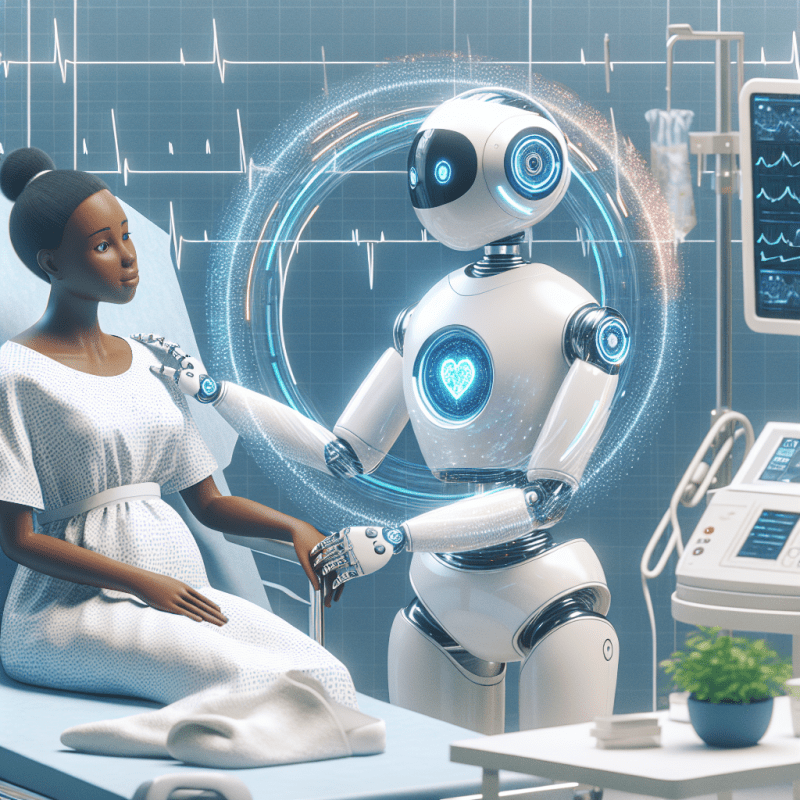
Industries from healthcare to education are on the brink of transformation thanks to AI. Doctors could use AI to diagnose illnesses faster. In schools, personalized learning powered by AI can help kids learn at their own pace. Imagine a future where everyone can get the help they need in real-time, no matter where they are.
And let’s not forget about creativity! AI is stepping into the art world, helping artists brainstorm ideas or compose music that resonates. It’s like having a creative buddy who inspires you every step of the way. The possibilities are endless, and the future looks bright.